
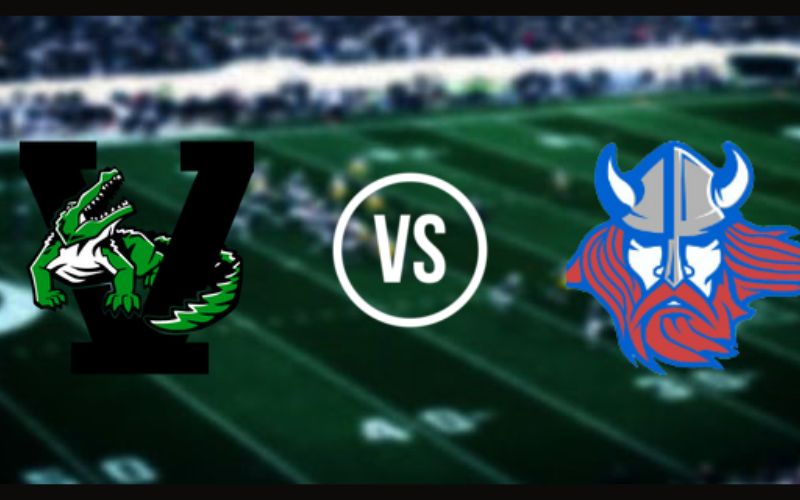
There is nothing quite like Friday night football in Vicksburg.
When Warren Central and Vicksburg High meet on the football field, it is more than another game on the schedule. It is a rivalry that stretches back more than four decades, bringing together generations of Vikings and Gators who know exactly what this game means to the community.
Friday night, the latest chapter was written as the Warren Central Vikings defeated the Vicksburg Gators 45–3.
Some fans watched it from the stands. But a remarkable number experienced the rivalry another way — through the radio.
According to Google Analytics for VicksburgRadio.com, approximately 1.3 thousand people listened to the Warren Central–Vicksburg broadcast through the website alone.
That number tells an important story about the continued value of local radio and high school sports broadcasting.
Not everyone can be in the stadium on Friday night.
Some people simply cannot handle the Mississippi heat. Some are older and no longer able to comfortably attend games. Others are home because of illness, work or family responsibilities. Then there are former Vicksburg residents, graduates and family members who may now live hundreds or even thousands of miles away.
For them, the radio broadcast becomes their seat in the stadium.
And bringing Friday night football to those listeners takes a team of its own.
Brandon Davis, Bob Sullender and Pernell DeFrance make up the broadcast team that brings the action to listeners who cannot be there in person for Warren Central. Charles Edmond and TJ Mayfield are there for Vicksburg High.
Their job is about much more than telling listeners the score.
When you cannot see the field, the broadcasters have to paint the picture for you. They tell you where the ball is, who made the tackle, who broke through the line, what the crowd is doing and how the momentum of the game is changing.
Through their voices, a listener sitting at home can picture what is happening under the Friday night lights.
And when the game is Warren Central against Vicksburg, there is plenty of history behind every snap.
This is a Rivalry More Than Four Decades Old!
The Warren Central–Vicksburg rivalry began in 1981, with Warren Central winning the first meeting 17–0.
That first game featured Lum Wright as Warren Central’s head coach and Rush McKay leading Vicksburg High.
The rivalry quickly became a major part of high school football in Vicksburg. Warren Central dominated much of its early history, winning 21 of the first 23 meetings between the schools.
Some of the most recognizable names in local football history have been part of the rivalry.
Longtime Warren Central coach Robert Morgan went 17–2 against Vicksburg during his tenure. Coaches and players on both sides have added their own chapters through the years.
There have also been stretches when Vicksburg turned the tables.
The Gators won 10–0 in 2005, then defeated Warren Central in 2007 and 2008 by identical 7–0 scores. In 2009, the rivalry produced a double-overtime game, with Vicksburg winning 13–7.
There have been blowouts, shutouts and games decided by a single point.
In 2021, Warren Central escaped with a 7–6 victory. The Vikings won 20–18 in 2022 and 19–18 in 2023. Warren Central followed those close contests with a 21–13 victory in 2024 and a 34–15 win in 2025.
Entering Friday night’s meeting, Warren Central held a 37–8 advantage in the all-time series.
But records only tell part of the story.
For the people of Vicksburg and Warren County, this rivalry represents classmates, neighbors, coworkers and sometimes even family members standing on opposite sidelines for one night.
And that is exactly why broadcasting the game matters.
But Radio Keeps the Community Connected.
Years ago, listening to a local high school football game meant being within range of the station’s radio signal.
Today, technology has changed that completely.
A Vikings or Gators fan can be sitting across town, across Mississippi or across the country and still hear the same broadcast as someone listening just a few miles from the stadium.
The approximately 1,337 online listeners recorded for the Warren Central–Vicksburg game demonstrate just how far a local broadcast can reach.
And remember: that number represents listeners through the website. It does not include everyone listening through the traditional radio broadcast.
Those numbers on an analytics screen represent real people.
Maybe one was an elderly fan who attended Warren Central or Vicksburg games for decades but can no longer climb the stadium steps.
Maybe another was a grandparent listening for a grandson’s name to be called after a big play.
Maybe someone was working Friday night and had the broadcast playing nearby.
Maybe a former Viking or Gator was listening from another state, remembering what it felt like to be part of this rivalry.
For those people, the broadcasters weren’t simply calling a football game.
They were their connection to home.
A football broadcast preserves something that a final score never can.
Years from now, the record book will show that Warren Central beat Vicksburg 45–3 on this particular Friday night.
But a score cannot reproduce the sounds of the crowd, the excitement after a touchdown, the emotion of a rivalry or the feeling of waiting to hear what happens on the next play.
Radio can.
High school football is about more than wins and losses. It is about communities, schools, families and generations of people sharing Friday nights together.
The stadium will always be at the center of that experience. Nothing can completely replace hearing the band, seeing the players run onto the field or celebrating a touchdown from the stands.
But not everyone can be there.
For those people, local radio makes sure they can still be part of it.
Forty-five years after Warren Central and Vicksburg first met on the football field, the technology surrounding the game looks very different. A broadcast that once traveled only as far as a radio signal can now reach a former student or fan virtually anywhere in the world.
But the reason people tune in hasn’t changed.
They want to know what is happening with their team.
They want to hear the voices and names they recognize.
They want to feel connected to their hometown.
And sometimes, all it takes is a radio broadcast on a Friday night to make someone sitting hundreds of miles away — or someone sitting at home just a few miles from the stadium — feel like they are right there on the sidelines.