
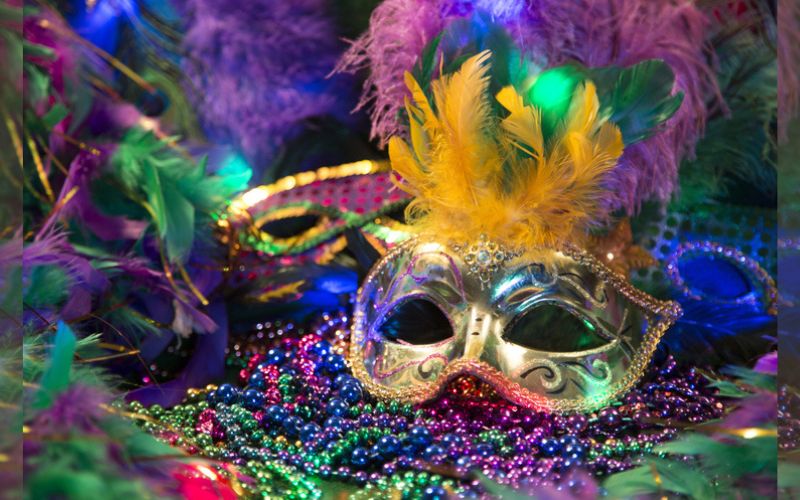
As colorful parades roll through city streets and crowds gather for music, beads and king cake, communities across the Gulf Coast and beyond are marking Mardi Gras — a centuries-old tradition rooted in faith, culture and festivity.
Mardi Gras, French for “Fat Tuesday,” is the final day of the Carnival season and falls on the day before Ash Wednesday, which begins the Christian season of Lent. Traditionally, it is a time of feasting and celebration before the 40-day period of fasting and reflection leading up to Easter.
The first recorded Mardi Gras celebration in what is now the United States took place in 1703 in Mobile, Alabama, when the city was the capital of French Louisiana.
French settlers brought the tradition with them from Europe, and Mobile — founded in 1702 — held the earliest documented Mardi Gras observance in the country. The city also established the first known Mardi Gras society in 1711.
There is also historical recognition that in 1699, French explorers Pierre Le Moyne d’Iberville and Jean-Baptiste Le Moyne de Bienville marked Mardi Gras while camped near present-day Biloxi, Mississippi, naming the site Point du Mardi Gras. However, that was an informal observance rather than an organized public celebration.
Louisiana, particularly New Orleans, became the epicenter of American Mardi Gras, though the holiday is also widely celebrated in Mississippi, Alabama, Texas, and Florida.
Modern Mardi Gras is best known for its parades, elaborate floats, masked balls and bead-throwing traditions. Parading organizations, known as krewes, organize events throughout the Carnival season, which begins on Jan. 6, known as Epiphany.
What is Epiphany?
Twelfth Night and Epiphany are closely connected Christian observances that mark the official end of the Christmas season and the beginning of the Carnival season in many traditions.
Twelfth Night is the evening of Jan. 5, the twelfth day after Christmas. It is traditionally a time of celebration before the Feast of the Epiphany on Jan. 6. In many cultures, Twelfth Night includes parties, music, and the taking down of Christmas decorations.
Epiphany, celebrated on Jan. 6, commemorates the visit of the Three Wise Men (Magi) to the baby Jesus, symbolizing Christ’s revelation to the wider world. In Christian tradition, it marks the end of Christmas and the start of Carnival, which leads up to Mardi Gras.
In places like Louisiana and along the Gulf Coast, Epiphany is especially significant because it kicks off the Mardi Gras season. That is why king cakes first appear in bakeries on Jan. 6.
Another staple of the season is king cake, a sweet, cinnamon-flavored pastry often decorated in purple, green and gold — the traditional Mardi Gras colors symbolizing justice, faith and power. A small plastic baby hidden inside the cake is said to bring good luck to the finder, who is then responsible for providing the next cake.
While Mardi Gras is often associated with large crowds and lively parties, its religious roots remain central. For many, the day represents both a joyful celebration and a meaningful transition into the solemn season of Lent.
Whether marked by family gatherings, parades, or quiet reflection, Mardi Gras continues to be a vibrant part of cultural life across the South, blending history, tradition and community in one of the region’s most recognizable celebrations.